

What are the causes of a Herniated Back Disc?
There are three (3) main causes of a herniation of back discs. These are sometimes called “ruptures” of the gelatinous cushioning-pliable gel between the bones in your spine. This difference is a matter of semantics. A herniation and a rupture are the same.
The three causes are:
- Wear and tear on the spine
- Traumatic injury
- A combination of degeneration from wear and tear and traumatic injury
Cause #1 – Wear and tear on the spine
What causes a herniation from wear and tear? Wear and tear on the spine over time causes a breakdown in the gelatinous disc material between the spine’s bones. This is made worse with high activity and with unusual twisting, turning, or awkward moves. If a person is overweight, it can further complicate the situation.
The discs between your back and bones are designed by nature to absorb shock from the movement of your body. The discs are the center of your body and put forth quite a bit of effort to ensure everything works properly.
Remember that Physics class you never took in high school? You were right. A physics class would have told you bad news. The second law of thermodynamics states that all closed systems will degenerate towards entropy (chaos) over time. The only way to avoid this is to steal order from another closed system.
Your body is just like this. This is why we cannot have perpetual motion machines and why we all die. Your back and the discs within your spine are closed systems. The longer you live and the more wear and tear your back receives, and the quicker your back will degenerate and wear out.
This causes you pain and result in certain mobility limitations. It can also result in the other discs in your back, which are making up for the degenerated discs, to suffer more wear and tear, and also degenerate faster. As it is said, “the candle that burns twice as brightly burns half as long.”
As the Annulus Fibrous (the outer layer of your back discs) weakens, water (through osmosis) leaves the jelly like inner layer of your disc causing it to shrink (this is why old people get shorter) which causes the discs to bulge, herniate, rupture, and press against your nerves. You experience this as pain.
The important part of all this in a lawsuit is to determine whether your back injury, pain, and limitations are caused by wear and tear or your accident. That is where your back injury attorneys use their expert skills and experience.
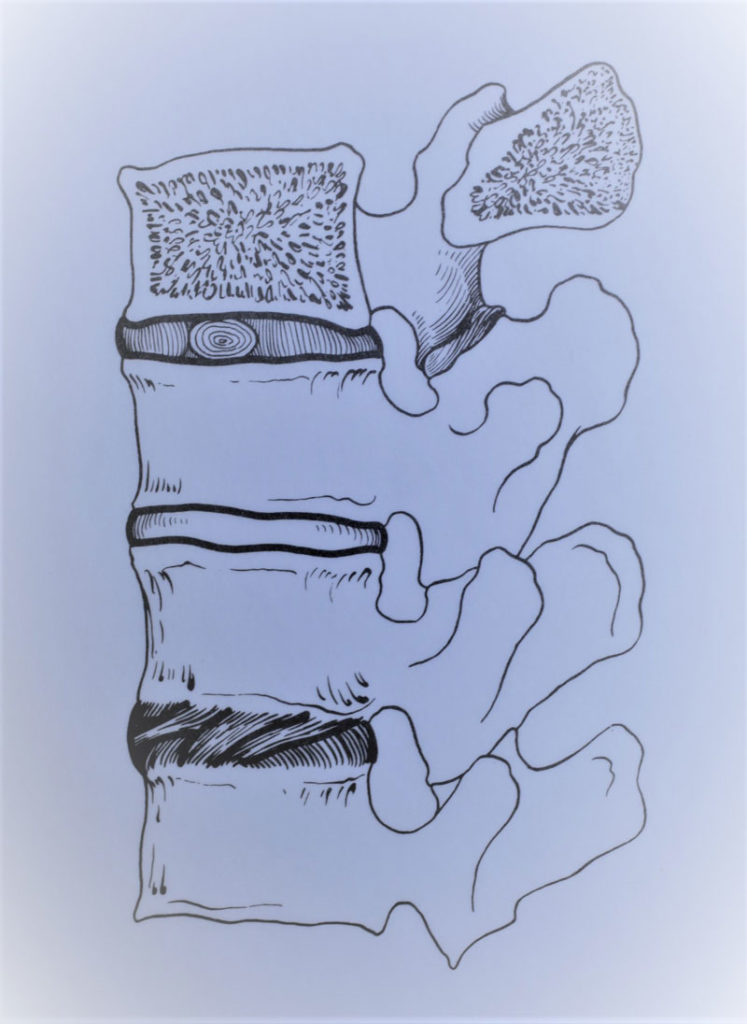
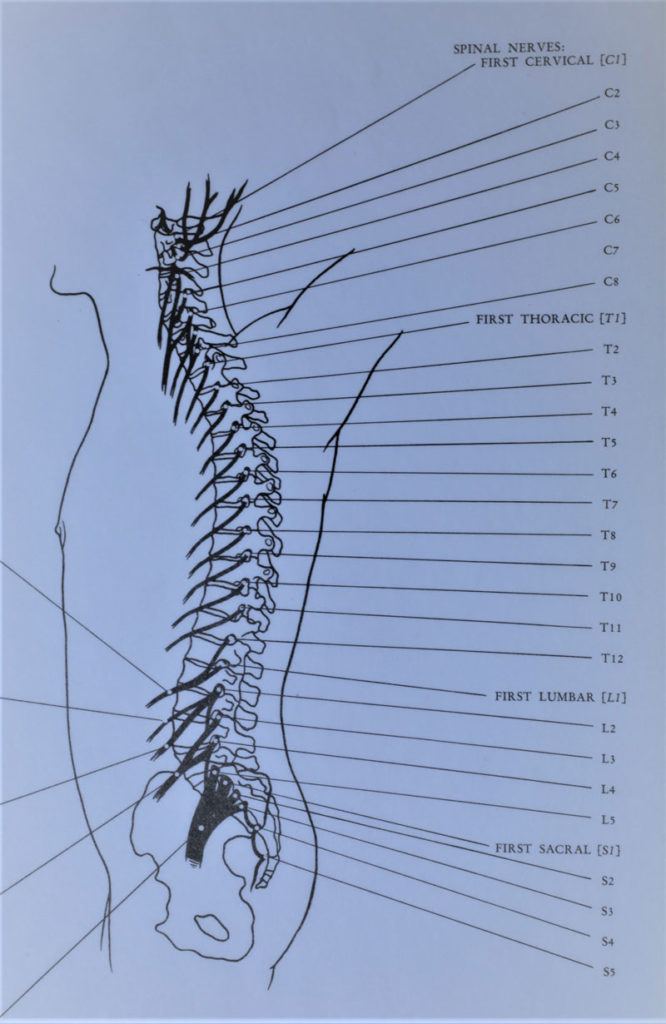
Cause # 2 – Traumatic injury
One may have a slow wear and tear process over many decades and then have an accident. In that accident thirty years of wear and tear may be placed on a single point in your back in an instant.
Traumatic injury causing back herniation causes a single disc to dehydrate or rupture. This does not typically happen instantly. It starts with dehydration and a quickening of the wear and tear. The disc height lessens, the person get shorter in height, and eventually that bulge hits the nerve. This does not typically happen overnight. It takes a matter of days, weeks, or even months to exhibit itself. An MRI taken immediately after an accident may not show a disc herniation.
Cause # 3 – Disc Ruptures of the Spine Caused by a Combination of Degeneration and Traumatic Injury
The combination of wear and tear and traumatic injury is the second most common cause of back herniation accident injuries.
Backs that have exhibited a large amount of wear and tear over time are more sensitive and susceptible to injury than young strong backs. This may be an “exacerbation” or “acceleration” of wear and tear back degeneration.
Backs can have bulges, herniations, ruptures, and other events and may function without any limitation or pain. Other bulges and herniations of equal size and appearance can be painful and limiting.
Technology is not to the point where one can see the connection with the nerve directly. These diagnoses are done by clinical evaluations.
What are the stages of a disc herniation?
Disc ruptures go through four (4) stages.
- Disc degeneration is the process of the weakening of the internal structure of the nucleus pulposus due to changes in the chemistry associated within the gelatinous spinal disc. An MRI will not show a bulge or herniation at this stage. Rather, this is the osmosis stage where water leaves the disc and it becomes unable complete its job of cushioning your spine.
- Prolapse is where the visible alterations occur in the disc. An MRI will show a bulge at this stage and it will begin to approach and squeeze in on the spinal nerves, such as the sciatic nerve. During prolapse, you may still be symptom free and not exhibiting pain or physical limitations. Your doctor will warn you at this point.
- Extrusion is the physical rupture or herniation of the disc. This is the point where the dam bursts / the levee breaks. Extrusion is the process of the breach of the jelly-like center of the disc through the tough disc wall into your body and towards your nerves. The internal structure, known as the Annulus Fibrosis, remains within the disc, but the jelly is out and about to harm you. This is where many patients will exhibit pain and limitations.
- Sequestration is the last stage of the herniated disc accident. The jelly continues to break through even the internal structure of the disc (the Annulus Fibrosis) and moves toward the spinal canal. Some call this Neuroforaminal Stenosis. Others simply call this a full-blown disc herniation rupture. You are lucky if you do not have extreme pain and limitations at this point. Sequestration is a serious lifelong injury with difficult treatment options.
What causes a disc herniation?
Pressure is the cause of disc bulges, herniations, and ruptures. This pressure can occur over time, gradually wearing down the protective thick coating of the spinal disc (annulus fibrosis or fibro cartilaginous) the split or for (rupture) of this thick skin around the disc space causes the internal jelly-like fluid to leak out.
When that leaking hits a nerve (in the spine, after all) you have great pain, shooting pain and symptoms down your arms and legs (known as radiculopathy) and physical limitations.
Where does spine herniation occur?
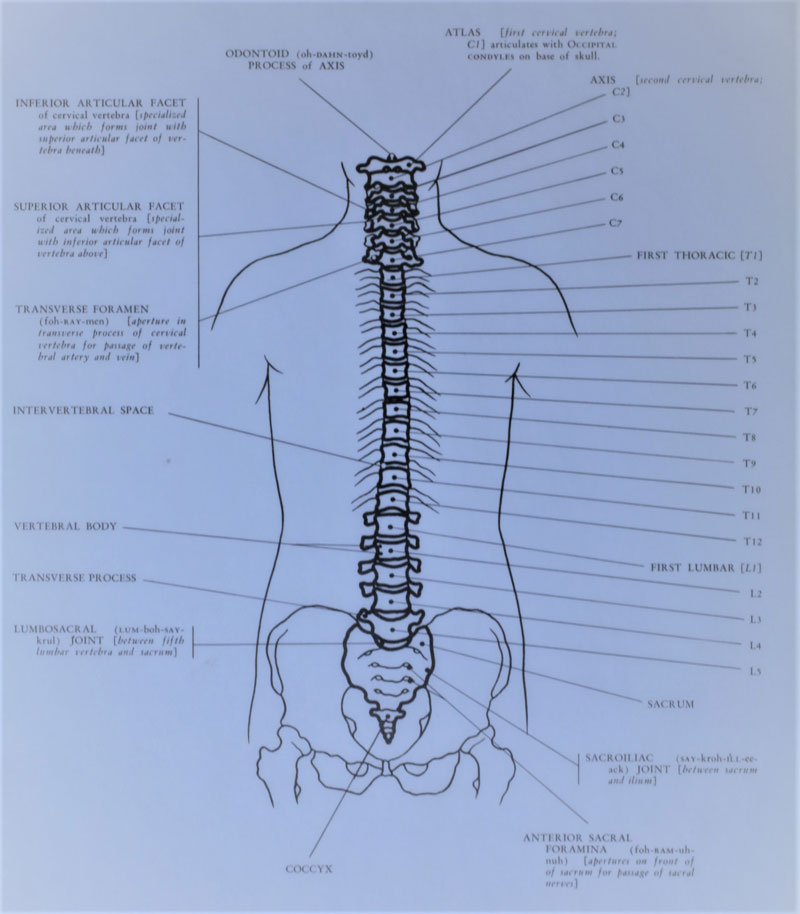
Your spine is made up of bones known as the vertebrae. There are twenty-six (26) vertebrae in the human body. They are divided between five distinct areas:
- Neck (cervical)
- Chest (thoracic)
- Lower back (lumbar)
- Tailbone (coccygeal)
Each region does not contain the same number of bones (vertebrae). They are as follows:
- Neck (cervical) = 7 vertebrae
- Chest (thoracic) = 12 vertebrae
- Lower back (lumbar) = 5 vertebrae
- Tailbone (coccygeal) = 5 vertebrae which are fused
There is one last area known as the coccyx which perhaps earlier our evolution was used as it is your true “tailbone” and is 4 extra fused vertebrae.
Where does a disc herniation usually happen?
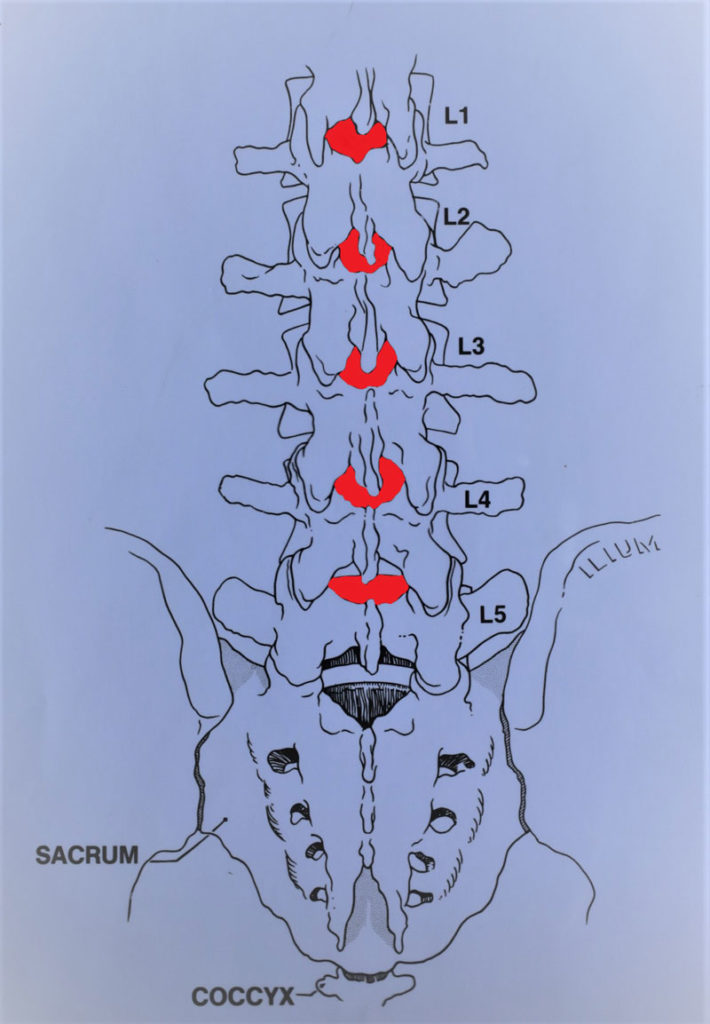
Since pressure is the cause of disc herniation and pressure is always greatest at the lowest point (excluding a traumatic injury), most disc ruptures and herniation occur in the lumbar region between vertebrae #5 and sacral vertebrae #1. Sometimes, this is referred to as L5-S1. The second most common area of disc herniation is the next vertebrae up, L4-5.
How is a disc herniation diagnosed?
A clinical diagnosis involving an examination by a chiropractor or physician in his office is not enough to truly diagnose a disc herniation. Expensive sophisticated scans are needed, which typically include the MRI, CT scan, CAT scan, and EMG (Electromyogram).
How is disc herniation treated?
Herniated discs vary considerably in their severity and seriousness. Typically, a physician will prescribe anti-inflammatory and pain relieving drugs for a period of at least eight weeks to give the body time to rest and recover. In addition, physical therapy is critical and you should expect at least eight weeks of therapy training.
Disc herniation injuries that do not become asymptomatic after physical therapy and drugs are treated with surgery. These types of surgeries are as follows:
- Discectomy: Removal of the portion of the disc that has leaked out and is pressing a nerve. A doctor will cut your skin, and remove a portion of the bone in the vertebrae (laminectomy). Then the doctor will cut out the disc liquid and gel that has leaked out and is pressing on the nerve (neuroforaminal encroachment) and sew you up. Sometimes only half of the disc is removed and this is called a “hemi laminectomy.”
- Corpectomy: This is where the doctor cuts you open and cuts out a piece of the bone in your back or disc until the portion of your spine with the nerves is free from being stretched or compressed. This should relieve the limitations, disability, and pain.
- Percutaneous excision is an out-patient operation where a needle is put into your back inserting a device that can cut and suck away the offending tissue.
- Orthoscopic micro discectomy. This is like a regular discectomy except it uses small devices that are less invasive. This, too, sucks out the failing solution from the entry sites in an attempt to heal.
- Laser disc decompression is similar to percutaneous excision. It is also similar to arthroscopic micro discectomy. The doctor uses a “laser” instead of a scalpel. This is an expensive surgery. Very few physicians employ this laser disc decompression.
Kansas City Herniated Disc Resources
There are a number of physicians groups that regularly treat herniation of the back and spine. We have worked with these treatment providers for decades. We don’t have a special relationship with these medical groups, we only mention them because of their excellent reputation at helping the seriously hurt.
Here are some of the best:
Kansas City Orthopedic Institute
3651 College Boulevard
Leawood, KS 66211
913-319-7633
Dickson-Diveley Orthopaedics
Medical Plaza Building 1, Suite 610
4320 Wornall Road
Kansas City, MO 64111
(really, this is the same as Dickson-Dively)
913-319-7600
Rockhill Orthopedic Specialists
120 NE St. Luke’s Boulevard, Suite 200
Lee’s Summit, MO 64086
1-816-246-4302
Select Physical Therapy
1535 NE Douglas Street
Lee’s Summit, MO 64086
816-347-1596
(other locations in Raytown, Lee’s Summit, Grandview, Raymore, Blue Springs, and Independence)
SERC Physical Therapy
1741 NE Douglas Street
Lee’s Summit, MO 64086
816-246-2663
(other locations in Lee’s Summit, Raytown, Pleasant Hill, Blue Springs, Belton, and Kansas City)