

Investigating Smart Devices and Cell Phones in Litigation
How to find, preserve, obtain, and admit digital evidence from smartphones, tablets, wearable technology, and other electronic devices at trial.
By Matthew Hamilton
A smartphone may be your most material lawsuit witness. It can record where a person traveled, whom they contacted, what was said, what was photographed, and sometimes what a party was doing when an event occurred. A smartphone is a persuasive, credible witness.
- Unlike a human, the phone retains a record from the moment the event occurred.
- Unlike a human, smartphone evidence is not viewed as biased.
Your challenge as a trial lawyer is to identify the evidence, preserve it before it disappears, obtain it through lawful discovery, and establish the foundation for its admission at trial.
“Smart” electronic evidence is not limited to cell phones. Tablets, smartwatches, fitness trackers, home security systems, smart speakers, computers, and cloud accounts may contain material, relevant evidence. The device in someone’s pocket, on their wrist, or mounted on the wall may possess evidence that the person does not know exists.
Obtaining this evidence requires an understanding of three subjects:
- the technology that creates and stores the information,
- the discovery rules that govern access to it, and
- the evidence rules that determine its admissibility.
Trial counsel does not need to become a forensic engineer. The investigating lawyer needs to know
- what evidence to seek,
- where it may be located,
- when to employ an expert, and
- how to get the evidence before a jury.
Understanding the Evidence Inside a Smartphone
A smartphone is not merely a telephone. It is a computer, camera, recording device, navigation system, communication platform, and personal information repository.
Depending on its configuration and use, a smartphone may contain:
- Communications: Telephone calls, text messages, emails, voicemail, and messages sent through applications.
- Location information: GPS records, navigation history, location-sharing information, and location metadata associated with photographs.
- Photographs and videos: Original files, timestamps, embedded location information, and other metadata.
- Internet activity: Browser history, search activity, downloaded files, and application records.
- Social media: Posts, comments, photographs, videos, private messages, and account activity.
- Application data: Information created by banking, transportation, shopping, fitness, navigation, and other applications.
- System information: Device identifiers, application activity, connection records, and other technical information, when available.
These records can establish facts that would otherwise depend on testimony.
- Consider a motor vehicle collision. The driver denies using a telephone immediately before impact. The phone may contain evidence of messages, application activity, or communication events during the relevant period. Those records may help establish a timeline. They do not, standing alone, necessarily establish who was holding the phone or whether the driver was distracted.
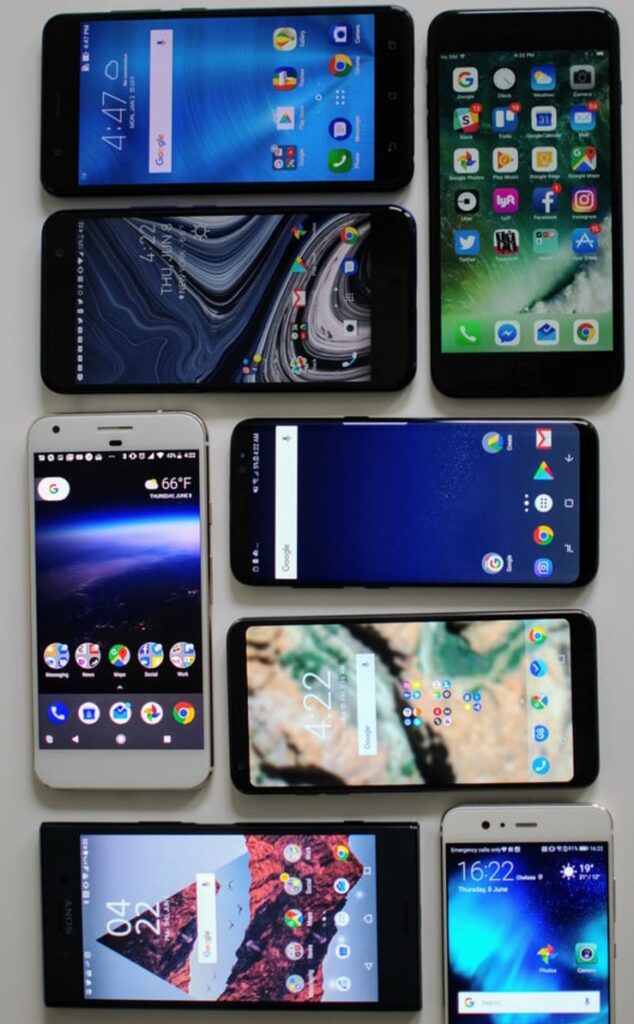
The same principle applies to other litigation. A personal injury plaintiff’s smartwatch may show changes in daily activity. An employee’s phone may contain communications concerning confidential business information. A home security camera may record an event that no witness observed. The first question is not whether the evidence is admissible. The first question is whether it exists.
Preserve the Evidence Before It Disappears R. 37(e)
Electronic evidence is perishable. Messages can be deleted automatically. Cloud accounts can be closed. Devices can be replaced, damaged, or reset. Backup systems can overwrite older information. A software update may change the location or availability of data. Preservation must begin when litigation is reasonably anticipated, not when the first discovery request arrives.
Rule 37(e) of the Federal Rules of Civil Procedure addresses the loss of electronically stored information that should have been preserved. The rule applies when information is lost because a party failed to take reasonable preservation steps and the information cannot be restored or replaced through additional discovery. The consequences depend on the circumstances.
Under Rule 37(e)(1), if the loss prejudices another party, the court may impose measures no greater than necessary to cure that prejudice. Under Rule 37(e)(2), the severe sanctions of an adverse presumption, adverse-inference instruction, dismissal, or default judgment require a finding of intent to deprive another party of the information’s use in litigation. The practical lesson is straightforward: preserve first and investigate second.
A. Your Preservation Notice: Make it Thorough
Your litigation hold should identify the relevant devices, accounts, applications, custodians, and time periods. It should specifically address text messages, messaging applications, social media, cloud storage, photographs, videos, location information, and available backups. A general instruction to preserve all documents may not adequately address applications designed to delete information automatically.
Suggested preservation language:
- “Preserve all electronically stored information relating to the events, persons, and subjects involved in this matter, including relevant information maintained on smartphones, tablets, computers, wearable devices, cloud accounts, messaging applications, and connected electronic devices. Suspend automatic deletion of relevant information where reasonably possible. Do not reset, replace, erase, modify, or dispose of any device or account containing potentially relevant information without first consulting counsel.”
Follow up your notice with your investigation. Counsel must determine which devices and accounts exist, what information they contain, and whether preservation occurred.
B. Should the Phone Be Turned Off?
There is no single preservation procedure suitable for every smartphone. A device may need to be isolated from wireless networks to prevent remote deletion or further synchronization. But powering down a modern phone can place encrypted data into a state that makes forensic access more difficult. The appropriate response depends on the device, operating system, security configuration, and available forensic tools.
Document the condition of the phone. Secure it against unauthorized use. Consult a qualified mobile-device examiner before changing its power or connectivity state when forensic collection may be necessary. Do not assume that ordinary handling of a phone is harmless to its evidence.
Four Methods of Obtaining Smartphone Evidence
There are several ways to collect information from a smartphone. The method you choose should depend on the kind of evidence your case needs, the accessibility of the device, the importance of metadata, and the cost of collection.
Method One: Screenshots and Photographs
The simplest method is to photograph the information displayed on the screen or create a screenshot. This method may be sufficient when the relevant evidence consists of a small number of text messages or social media posts. It is inexpensive, fast, and does not require specialized forensic equipment.
The principal weakness is that a screenshot generally captures only what appears on the screen. It omits the underlying metadata, earlier messages, attachments, and information necessary to establish context. A screenshot can also be manipulated.
When using this method, capture the complete conversation or relevant sequence, identify the account or phone number, record the date of collection, and preserve the original screenshot files.
Method Two: Logical Extraction and Device Backups
A logical extraction obtains information through the device’s operating system, authorized interfaces, or backup functions. Apple and Android devices provide backup mechanisms that may preserve contacts, messages, photographs, and other user information. The available data varies by device, operating system, settings, and application.
Specialized software can sometimes extract and organize information from these backups. Extraction programs include iMazing, PhoneView, and other tools intended to collect mobile-device data. A logical extraction often provides more useful information than screenshots, but it may omit system records, inaccessible application data, or information not included in the backup.
Method Three: Full File-System Extraction
A full file-system extraction attempts to obtain accessible files and databases from the device’s file system. Depending on the device and method, this may include application databases, communication records, system information, and additional metadata unavailable through ordinary backups.
Forensic tools used in this field include Cellebrite, Magnet AXIOM, Oxygen Forensic Detective, MSAB XRY, and other specialized products. These tools are not interchangeable. Their capabilities depend on the specific device, operating system, encryption, and software version. A full file-system extraction does not guarantee recovery of every file, deleted record, or unallocated storage area.
When evidence is disputed, substantial damages are involved, or deleted information may be important, a qualified forensic examiner should evaluate whether this method is warranted.
Method Four: Collection From Cloud Accounts
Many lawyers focus on the telephone and overlook the account connected to it. Information may reside in Apple’s iCloud, Google services, Microsoft OneDrive, Dropbox, social media accounts, or other remote systems. There are famous examples of people deleting sensitive photographs, videos, and files off of their phone, with those same files later being extracted from their clud accounts.
A complete examination of the phone does not necessarily include information stored only in the cloud. Many platforms provide authorized users with methods to export account data. Google Takeout, for example, permits downloads of certain data associated with a Google account.
Google Maps Timeline presents a separate problem. Google transitioned Timeline storage toward users’ devices, with optional encrypted backups. Do not assume that historical Timeline information remains available through an ordinary Google Takeout export. Identify every relevant account and determine separately how its data can be preserved and collected.
Text Messages, Encrypted Applications, and Disappearing Evidence
Text messages frequently provide the clearest evidence of what people knew, said, or intended. But text messages are not all stored in the same way. Traditional SMS and MMS messaging, Apple’s iMessage, WhatsApp, Signal, Snapchat, Telegram, and other applications use different technologies and retention systems.
Some applications store information in the cloud. Others use end-to-end encryption that prevents the service provider from accessing message contents. Some permit automatic deletion after a specified period.
- Telegram, for example, distinguishes between ordinary cloud chats and end-to-end encrypted Secret Chats. It should not be treated as using the same storage model for every conversation.
For litigation, the distinction matters. An encrypted message may still be available on the sender’s or recipient’s device, in an authorized export, or in a backup. A provider cannot produce information it does not possess or cannot access.
Disappearing messages require special attention. Think SnapChat. A message may disappear from one device while related evidence remains in a notification, backup, another participant’s records, or another authorized source. Recovery is possible in some circumstances but should never be assumed.
You, as the investigating trial lawyer should identify the application, relevant participants, date range, retention settings, and available sources before deciding how collection should proceed.

Spoliation – Do Not Instruct Your Client to “Clean Up” their Device
In Gatto v. United Air Lines, Inc., No. 10-cv-1090, 2013 WL 1285285 (D.N.J. Mar. 25, 2013), the court permitted an adverse inference concerning unavailable Facebook evidence after the plaintiff’s account was deactivated and its contents became inaccessible. The case illustrates why preservation instructions must address social media and account status.
A lawyer should never tell a client to clean up an account by deleting photographs, posts, or messages that may be relevant to anticipated litigation. Such advice can turn an ordinary discovery problem into a contempt and sanctions problem. Don’t do it.
Obtaining Evidence From Wireless Service Providers
Wireless carriers maintain records that differ from the information stored on a customer’s telephone. Call detail records may identify incoming and outgoing calls, telephone numbers, dates, times, call durations, and certain network activities. Depending on the carrier, system, and period, additional records may include subscriber information, data-session records, and cell-site location information.
The distinction between records of a communication and the contents of a communication is critical. A carrier may maintain records showing that a text message was transmitted without retaining the message itself. Counsel should not assume that a cellular provider can produce the contents of historical text messages.
Retention periods vary by provider, record type, system, and applicable preservation obligations. Published retention estimates should not be substituted for confirmation from the provider. Identify and preserve wireless carrier records early as (1) the evidence may disappear, (2) you may run out of time to retrieve it before you need it for mediation or trial, and (3) retrieving it at the last minute will distract you for more important tasks.
Drafting a Wireless Carrier Subpoena: What to Request?
A narrowly drafted subpoena should identify the subscriber, account or telephone number, relevant dates, and the precise categories of records sought.
- For a case involving telephone usage, relevant categories may include call detail records, SMS/MMS transmission metadata, subscriber records, and available device identifiers.
- For a case involving location, counsel may also investigate historical cell-site records and associated network information.
But location evidence requires care. A cell-tower connection does not necessarily identify the phone’s exact geographic position. The relationship between a handset, tower, and coverage area can be affected by network design, signal conditions, geography, and other factors.
- In Carpenter v. United States, 585 U.S. 296 (2018), the Supreme Court held that the government’s acquisition of historical cell-site location information in the circumstances presented constituted a Fourth Amendment search.
Carpenter concerns government access to location information. It does not create a general right for a private civil litigant to obtain protected records through an ordinary subpoena. Before seeking location records from a carrier, determine the applicable statutory restrictions, privacy requirements, consent issues, and whether the requested records are available.
The Stored Communications Act: Your Subpoena May Not Be Enough
Prepare to be frustrated. A social media company often will not produce relevant private communications in response to a civil subpoena. The refusal will likely be based on federal law rather than unwillingness to cooperate.
The Stored Communications Act, 18 U.S.C. §§ 2701–2713, regulates access to and disclosure of stored electronic communications and associated records. Section 2702 restricts certain voluntary disclosures by covered providers. Section 2703 establishes procedures for compelled government access. An ordinary civil subpoena does not create a general exception permitting a covered provider to disclose the contents of protected private communications.
- In Crispin v. Christian Audigier, Inc., 717 F. Supp. 2d 965 (C.D. Cal. 2010), the court applied the Stored Communications Act to private communications maintained by social networking services.
Do not let your subpoena be your only mean of evidence collection. Consider obtaining the information directly from the account holder through a discovery subpoena, Requests for the Production of Documents, voluntary authorized exports, valid consent procedures, or other lawful means.
- In federal civil litigation, use Rule 34 as it permits requests for electronically stored information in a party’s possession, custody, or control.
- Consider also Rule 45 as it provides procedures for obtaining information from nonparties, subject to applicable statutory limitations.
The controlling principle is simple: determine who has the information, who can lawfully access it, and which legal process applies. Prepare to use multiple extraction methods.

Smartwatches and Fitness Trackers: Evidence on the Wrist
A smartwatch may record information that a smartphone does not. Depending on the device and settings, the information may include step counts, movement, exercise sessions, heart rate, sleep activity, location, and other physiological or behavioral measurements.
Devices manufactured by Apple, Garmin, Fitbit, Samsung, and other companies may also communicate with applications on connected smartphones and cloud accounts. Evidence may therefore exist in several places: the wearable device, the connected telephone, the companion application, and a remote account.
- Personal injury litigation is a great application for the use of this information. A plaintiff who alleges a permanent loss of mobility may have activity records covering the period before and after an accident. Those records may help establish a change in activity or test a claim about physical limitations.
But activity data is not a medical diagnosis. An increase in recorded steps does not establish an absence of pain, and a decrease does not by itself establish disability. Device accuracy, usage patterns, missing data, and medical context must be evaluated.
A Missouri Case: Bartis v. Biomet
In Bartis v. Biomet, Inc., No. 4:13-CV-00657-JAR, 2021 WL 2092785 (E.D. Mo. May 24, 2021), a plaintiff alleged injuries and limitations related to a hip implant. The defendants requested data from the plaintiff’s Fitbit.
The Bartis court concluded that recorded activity levels were relevant to the plaintiff’s claims concerning pain and reduced mobility. It ordered production of Fitbit data, including step counts, while permitting the plaintiff to redact information concerning heart rate, sleep, and physical location. The Bartis court recognized both the evidentiary value of wearable-device information and the privacy limits on obtaining it. The lesson is important: a device may contain discoverable evidence, but that does not make every record on the device discoverable.
Smart Homes and Other Connected Devices
The modern home is filled with electronic devices capable of creating evidence. Home security cameras may record movement, visitors, vehicles, and events around a residence. Smart doorbells may record deliveries and conversations near an entrance. Smart locks may maintain records of access events.
Smart speakers, including Amazon Echo, Google Nest, and Apple HomePod devices, may retain interaction histories or related account data, depending on their configurations. These products do not necessarily record and preserve every conversation in a room. Collection depends on activation, settings, account policies, and the information retained.
- Consider a premises liability case involving a fall outside a residence. A doorbell camera may have recorded the event. A smart lock may show when a door was opened. A connected lighting system may contain information relevant to the condition of the premises.
Each record has potential evidentiary value. Each requires proof that it accurately represents what the proponent claims. The lawyer should identify the manufacturer, device model, associated application, account holder, storage method, and retention policy. The same discovery principles apply to connected devices in workplaces, vehicles, and commercial premises.
Metadata: Evidence Behind the Evidence
Metadata is information about electronic information. Depending on the file, it may include creation dates, modification dates, authorship, device identifiers, geographic coordinates, revision history, or technical details concerning the file’s operation.
A photograph is evidence of what the camera captured. Its metadata will provide additional information about when, where, and how the file was created. The information can be crucial to establishing authenticity.
- For example, a photograph offered as evidence of a condition on the day of an accident may contain metadata identifying the camera and a recorded creation time. That information can help test the witness’s account.
Metadata has limits. A file’s creation date may reflect when it was copied into a particular file system rather than when the underlying photograph was taken. Device clocks may be inaccurate. Metadata may be altered, stripped, or fabricated. Metadata should be examined in context, not treated as infallible proof.
Preserve the Original File
When authenticity matters, request native files or another reasonably usable production format that preserves the metadata needed for the issues in dispute.
- Converting an email into a PDF may remove routing information and other metadata.
- Forwarding an email may omit original technical headers.
- Copying or editing files can change timestamps or other information.
Document how the information was obtained and preserve an unmodified source copy when possible.

Hash Values and Chain of Custody
A hash value is a digital identifier calculated from the contents of a file or collection. Algorithms such as SHA-256 can be used to compare data collected at different times.
Matching cryptographic hashes provides strong evidence that the compared data has not changed. The hash will not establish who created the information, whether the original content was truthful, or whether the acquisition was complete.
A chain-of-custody record should identify who collected the evidence, when it was collected, the equipment and methods used, where the information was stored, and who subsequently handled it.
If the collection method later becomes an issue at trial, those details may determine whether the evidence survives an objection.
Federal Discovery Rules Governing Electronic Devices
Federal Rules of Civil Procedure 26, 34, 37, and 45 provide the principal procedural framework for obtaining electronically stored information in federal civil litigation.
- Rule 26(b)(1): Relevance and proportionality. Discovery must concern nonprivileged matters relevant to a claim or defense and proportional to the needs of the case. The proportionality analysis considers the importance of the issues, amount in controversy, access to information, resources, importance of the discovery, and whether the burden or expense outweighs its likely benefit.
- Rule 34: Production of electronically stored information. A party may request relevant information in another party’s possession, custody, or control. The requesting party may specify the form of production, subject to the rule’s procedures and limitations.
- Rule 37(e): Failure to preserve. The rule addresses loss of electronically stored information and the circumstances in which curative measures or sanctions may be imposed.
- Rule 45: Nonparty discovery. Subpoenas may seek documents and electronically stored information from nonparties, subject to statutory restrictions, procedural requirements, objections, and protections against undue burden.
Draft Discovery Requests for the Evidence You Need – Use Your Trial Theme
A request for every item stored on a person’s phone over several years is likely to generate substantial objections. A request identifying specific communications, participants, applications, and dates is easier to defend.
Example request for text messages:
- “Produce, in native or another reasonably usable electronic format with available metadata, all text messages and messages transmitted through third-party messaging applications between [identified persons] concerning [specified subject] during the period [date] through [date], including available attachments and surrounding messages necessary to understand the communications.”
Example request for wearable-device evidence:
- “Produce available daily step-count and activity records maintained by any smartwatch or fitness-tracking application used by Plaintiff during the period [date] through [date], together with information reasonably necessary to identify the device, data source, and method of export.”
The scope of your request should be tied to a disputed issue, so use the Petition, the Answer, and and Affirmative Defenses. Be prepared to name the pleading and paragraph that opens the door for discoverability. Sensitive information unrelated to the lawsuit may require redaction, a protective order, or a more limited examination. Thus, the right to obtain relevant evidence is not a license to inspect someone’s entire digital life.
Authenticating Digital Evidence at Trial
Let’s talk about admissibility. Collecting evidence and admitting evidence are different tasks.
Federal Rule of Evidence 901(a) requires sufficient evidence to support a finding that the item is authentic. A witness with personal knowledge may establish that a message accurately reflects a conversation. Other evidence may connect a message to its purported author. The authentication inquiry may involve telephone numbers, account identifiers, message content, distinctive language, surrounding circumstances, device information, and corroborating records.
- In United States v. Lamm, 5 F.4th 942 (8th Cir. 2021), the Eighth Circuit recognized that social media evidence may be authenticated through circumstantial evidence linking the defendant to the account.
A platform’s records may establish that an account existed or that a communication was transmitted. Additional proof may be necessary to establish who actually authored it.
Self-Authentication Under Rule 902
Federal Rules of Evidence 902(13) and 902(14) permit certain electronic evidence to be authenticated by a qualified person’s certification.
- Rule 902(13) addresses records generated by an electronic process or system that produces accurate results.
- Rule 902(14) addresses data copied from an electronic device, storage medium, or file and authenticated through a process of digital identification.
These provisions can eliminate the need for live authentication testimony when their requirements are satisfied, including applicable advance notice. They do not eliminate other evidentiary objections.
A record may be authentic yet still contain hearsay. It may be authentic yet irrelevant. A record may be excluded under Rule 403 or fail another evidentiary requirement. Remember to separately address hearsay, the original-writing requirements, relevance, and any need for expert testimony.

Questions for the Foundation Witness
A lawyer preparing to introduce digital evidence should be able to ask:
- “How did you obtain this information?”
- “What device or account was the source?”
- “When was it collected?”
- “What method or software was used?”
- “How do you know this exhibit accurately reflects the information collected?”
- “Was the information modified, filtered, converted, or enhanced after collection?”
- “What records document the collection and subsequent handling of the evidence?”
- “What evidence connects this communication to the person alleged to have sent it?”
Make sure to cover your witnesses’ answers before trial. Do not invent or “wing” the admissibility issue at an evidentiary objection.
Artificial Intelligence: The Problem of Altered Evidence
Modern smartphones make altering photographs and videos easy. Artificial intelligence makes creating realistic false content easier still. A photograph can be edited to remove an object. Audio can be modified. A video can be manipulated. Entire images and voices can be generated without recording a real event.
The danger is not limited to a completely fabricated exhibit. A genuine recording can become misleading when a portion is removed, surrounding events are omitted, or dates and context are misstated.
When digital evidence appears questionable, counsel should examine the original file, available metadata, acquisition history, and any versions created during editing. If AI was used to enhance evidence, establish what the software did, what information was changed, and whether the process introduced details that were not present in the original.
The Original Must Remain Available
An enhanced image may assist a jury in seeing details in an otherwise difficult recording; but an AI-generated reconstruction is not the original recording. Preserve the original before any AI Generated reconstruction and document every material processing step.
The same principle applies to video stabilization, noise reduction, image sharpening, and other methods of enhancement. When an expert offers opinions based on digital processing, Rule 702 requires an adequate showing of reliable principles, methods, and application. Rule 403 also permits exclusion when the danger of unfair prejudice, confusion, or misleading the jury substantially outweighs the probative value. The more sophisticated the technology, the greater the need to explain what the evidence actually establishes.
A Practical Investigation Protocol for Trial Lawyers
A sensible investigation follows a sequence:
- First, identify the disputed fact. Determine what the electronic information might prove or disprove. Avoid collecting data merely because it exists.
- Second, identify the devices and accounts. Ask who used them, who controls them, how they communicate with other devices, and where information is stored.
- Third, preserve the information. Issue targeted preservation notices and address automatic deletion, device replacement, account closure, and backup rotation.
- Fourth, select a lawful collection method. Determine whether the evidence can be obtained through a witness, authorized account export, Rule 34 production, Rule 45 subpoena, or forensic examination.
- Fifth, preserve metadata and document collection. Retain source files where possible, record the method of collection, and maintain a chain of custody.
- Sixth, test the evidence. Compare it with testimony, other communications, independent records, and the surrounding timeline. Investigate discrepancies rather than assuming the electronic record is conclusive.
- Seventh, plan for admissibility. Identify the foundation witness, necessary certifications, potential hearsay exceptions, and likely objections before discovery closes.
- Eighth, prepare the jury presentation. Use a format the jury can understand. Preserve accuracy and context. Do not sacrifice reliability for visual impact.
Not every case justifies an expensive forensic examination. The cost and scope of collection should reflect the importance of the evidence and the needs of the case. But when a critical disputed fact depends on digital information, inadequate preservation or collection may cost far more than a qualified examination.

The Smart Device Is a Witness That Must Be Examined
Smart device evidence that will win your case may be inside a smartphone, stored in a cloud account, preserved by a wearable device, or recorded by an electronic system in a home or business. It may establish an important fact. It may contradict a witness. It may reveal the source of a photograph, the timing of a message, or the movement of a device. Investigate for and admit it when useful
Remember that a digital record does not interpret itself. You must determine whether the record is complete, whether it accurately measures the event in question, whether it can be attributed to the proper source, and whether it satisfies the rules of evidence. As an investigating trial lawyer, your job is not to collect the largest possible amount of data. The job is to obtain material, admissible evidence for a hearing or trial. Please use the technics I outline in this article to do so.
Find it early. Preserve it correctly. Admit it. Argue what it means. Win with it.
Bibliography and Legal Authorities
Primary Educational Materials
- National Business Institute. Obtaining Evidence From Smartphones and Other Electronic Devices: 2027 Edition. CLE materials, November 20, 2026. Including presentations and written materials by Sloan L. Abernathy, Sonya Strnad, and Bruce B. Paul.
- Strnad, Sonya, and Cynthia G. Burnside. E-Discovery in the Age of Social Media: Plunder or Blunder—Mining for Gold and Dodging the Silver Bullet. American Bar Association Section of Litigation Annual Conference, April 18–20, 2012. Reproduced in the NBI CLE materials.
Federal Statutes and Rules
- Federal Rules of Civil Procedure. Rules 26, 34, 37, and 45. Governing discovery scope, electronically stored information, preservation sanctions, and third-party subpoenas. Federal Rules of Civil Procedure.
- Federal Rules of Evidence. Rules 401, 403, 702, 803(6), 901, 902(11), 902(13), 902(14), and 1001–1003. Governing relevance, expert testimony, hearsay exceptions, authentication, self-authentication, and original writings. Federal Rules of Evidence.
- Stored Communications Act. 18 U.S.C. §§ 2701–2713. Governing access to and disclosure of stored electronic communications and related information. 18 U.S.C. § 2702.
- American Bar Association. Model Rules of Professional Conduct, Rules 1.1, 1.6, and 8.4, including Rule 1.1, Comment 8. ABA Model Rules.
Judicial Decisions
- Bartis v. Biomet, Inc., No. 4:13-CV-00657-JAR, 2021 WL 2092785 (E.D. Mo. May 24, 2021). Discovery of Fitbit activity records, relevance, proportionality, and privacy limitations.
- Carpenter v. United States, 585 U.S. 296 (2018). Fourth Amendment protections concerning government acquisition of historical cell-site location information.
- Crispin v. Christian Audigier, Inc., 717 F. Supp. 2d 965 (C.D. Cal. 2010). Application of the Stored Communications Act to private social media communications.
- Gatto v. United Air Lines, Inc., No. 10-cv-1090, 2013 WL 1285285 (D.N.J. Mar. 25, 2013). Spoliation and unavailable social media evidence.
- Lorraine v. Markel American Insurance Co., 241 F.R.D. 534 (D. Md. 2007). Authentication and admissibility of electronically stored information.
- Riley v. California, 573 U.S. 373 (2014). Fourth Amendment protections for the contents of cell phones searched incident to arrest.
- United States v. Lamm, 5 F.4th 942 (8th Cir. 2021). Authentication of social media evidence through circumstantial proof.
Technical and Professional References
- National Institute of Standards and Technology. Guidelines on Mobile Device Forensics. NIST Special Publication 800-101, Revision 1 (2014). NIST Publication.
- Scientific Working Group on Digital Evidence. Best Practices for Mobile Device Evidence Collection & Preservation, Handling, and Acquisition. Version 2.0 (August 21, 2025). SWGDE Publications.
- Manage Your Google Maps Timeline. Google Maps Help. Guidance concerning device-based Timeline records, backups, and data exports. Google Maps Help.
- American Bar Association. New Rules for Self-Authenticating Electronic Evidence. ABA Section of Litigation. Discussion of Federal Rules of Evidence 902(13) and 902(14). ABA Article.

Trial lawyer Matt Hamilton graduated from the University of Missouri in 1995 with Science degrees in Logistics, Marketing, and Business Administration. Juris Doctor, 1999.
Let's talk. Please let me know should you have questions.